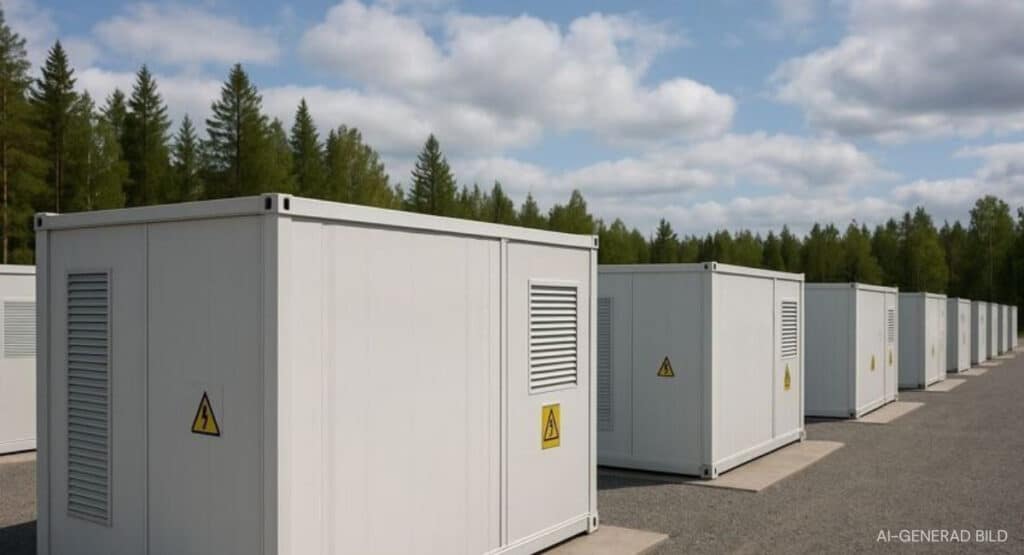
Battery storage has quickly become an increasingly important part of Sweden's energy system. It evens out variations in production and consumption, relieves pressure on the electricity grid, and strengthens local operational reliability. In a short period of time, interest has grown among municipalities, grid companies, and industry. At the same time, increased expansion means that projects are increasingly located in environments with significant natural and cultural values.
Battery storage facilities are usually located close to existing infrastructure or on small areas where land use has varied over time – places that can accommodate more values than are immediately apparent. Small project areas therefore place high demands on precision in the early stages. Without a clear picture of the conditions, there is a risk that the design will have to be redone, which will quickly affect the schedule and budget.
"It's about minimizing risks early on. Avoiding having to change the location after late discoveries of species or ancient and cultural remains, and instead being able to move the project forward immediately thanks to a good foundation from the start," says David Israelsson, Business Manager at Ecogain.
Four risk factors that often affect battery storage projects
Even small areas can contain details that are crucial to how the project can develop. Risks that often need to be addressed at an early stage include:
1. Natural values in small and difficult-to-assess areas
Small wetlands, grasslands, ditches, and forest edges can have high biological value. They are scattered, complex, and not always easy to detect without systematic analysis of GIS data and aerial photographs.
2. Species occurrences that determine placement
Known occurrences of protected species – especially in edge zones adjacent to forests, water, or agricultural land – may require that parts of the area be avoided or that the facility be designed differently.
3. Cultural environments close to infrastructure
Archaeological remains and traces of older land use are often found in connection with industrial areas and utility corridors. These affect both location and buildability.
4. Areas requiring further inventory
In some cases, the analysis indicates areas where additional fieldwork is needed. Identifying this early on reduces the risk of unexpected additions later in the process.
In projects with tight schedules, these initial choices are crucial in determining whether the process will run smoothly or be interrupted.
What do stakeholders need to consider at an early stage?
A stable start is based on having a comprehensive picture of the site's conditions before planning, land agreements, and consultation processes. This means that:
- identify natural and cultural values at an early stage
- assess which parts of the area are most suitable for establishment
- avoid areas where the risks are high or the ground is unclear
- ensure that the project meets the requirements of authorities and landowners
This is where a structured preliminary study comes in as one of the most important tools.
NVI preliminary study provides the right basis at the right time
An NVI preliminary study (Nature Value Inventory at the preliminary study level) is based on GIS analysis, aerial photographs, species data, and available map data, which, together with the ecologist's experience and local knowledge, provide a quick and accurate basis for decision-making.
For stakeholders, this means:
- clear maps of natural values and risk areas
- basis for consultation processes and dialogue with landowners
- better choices for project planning
- knowledge of any need for further inventory
"These desk studies are predictably cost-effective and can be followed up with field inventories if necessary," says David Israelsson.
Want to know more?
We are happy to help assess what documentation is needed for battery storage projects and how you can get a clear picture of the site's conditions at an early stage.