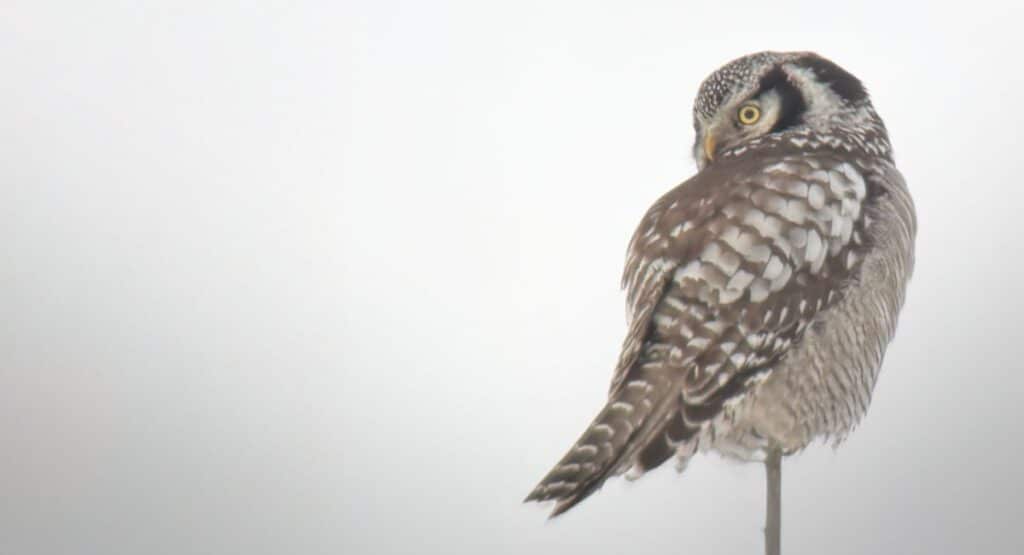
During dark nights in February and March, some of the earliest signs of spring can be heard in our forests: owls begin to hoot. This is when they establish their territories, and it is also when owl inventories are most accurate. This period is therefore particularly important for both nature conservation and permit processes.
Declining populations and increased protection
At the same time, owls are becoming increasingly rare in the Swedish countryside. Ahead of the upcoming red list, which will be published in March 2026, available data and long-term trends indicate that several of Sweden's owl species are in a vulnerable position. The decline is due to several interacting factors, with climate change affecting food availability being a major cause.
When species are red-listed, their priority in nature conservation work increases. At the same time, legal protection is strengthened through case law related to species protection, which in practice means that the requirements for species knowledge and documentation in permit cases are tightened.
Need for a solid knowledge base
When developing land, undertaking infrastructure projects, or making other interventions in natural environments, it is important to identify and take into account the presence of species worthy of protection at an early stage, with owls increasingly becoming part of the assessment process. This is particularly true in forest landscapes, where many energy and infrastructure projects are located and where changes in land use can affect several species with specific habitat requirements.
Inadequate or late inventories can lead to requests for additional information, extended processing times, or the need to revise project plans. This makes early and well-defined knowledge bases an important part of an efficient and predictable permitting process.
We see this clearly in our assignments, where demand for owl inventories is increasing in several different industries, including energy, manufacturing, and infrastructure.
Modern methods for efficient inventories
Today, there are excellent opportunities to conduct owl inventories in an efficient and quality-assured manner. With the help of automated sound boxes, owl calls can be recorded throughout the night without the need for an inventory taker to be on site. This method provides a solid basis that is supplemented by expert ecological assessment and in-depth species knowledge.
The right methodology, the right season, and correct interpretation are crucial for the inventory to be useful in a permit process.
Owl inventories as part of permit support
At Ecogain, we conduct owl inventories as an integral part of our services in natural value inventory, species protection assessments, and permit support, to ensure that the right documentation is in place at the right stage of the process. This allows species protection issues to be handled proactively and contributes to more predictable and efficient permit processes.