After the closure of the Stekenjokk mine, restoring nature around the mine site proved difficult. Boliden, together with Ecogain, has developed methods to recreate natural vegetation on the site.
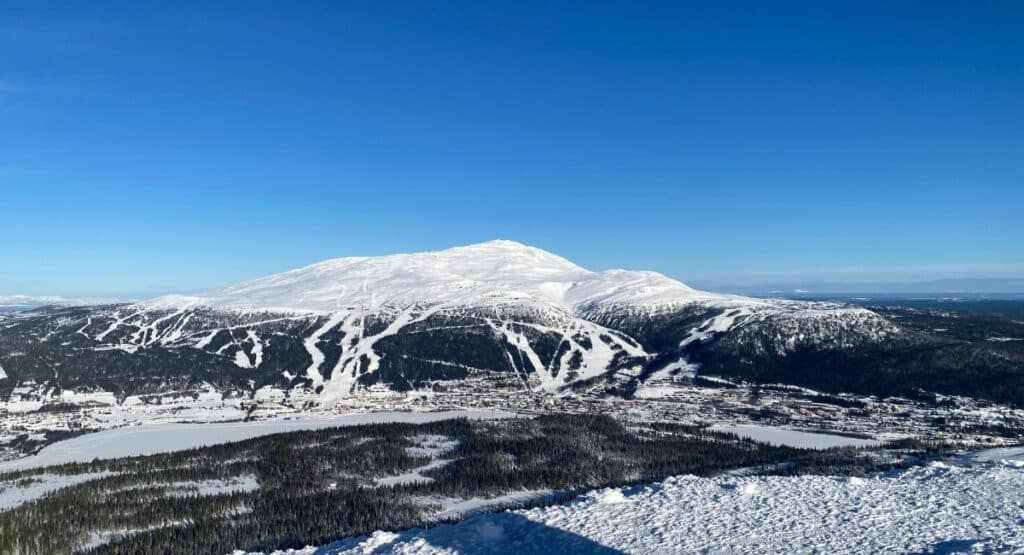
During the summer, Vildmarksvägen and Stekenjokk have been a popular destination for home stays. What not everyone knows is that one of Boliden's old mining areas is actually located there, in the middle of the bare mountain.
The mine was active in the 1970s and 1980s, after which the mine area was rehabilitated according to a rehabilitation plan approved at the time. Traces of the mine are no longer visible. But the barren climate in Stekenjokk has made it difficult to re-establish natural vegetation in the area, which has been important for the Vilhelmina södra sameby, among others. One of the goals of the attempts to bring back nature has therefore been to recreate good reindeer grazing.
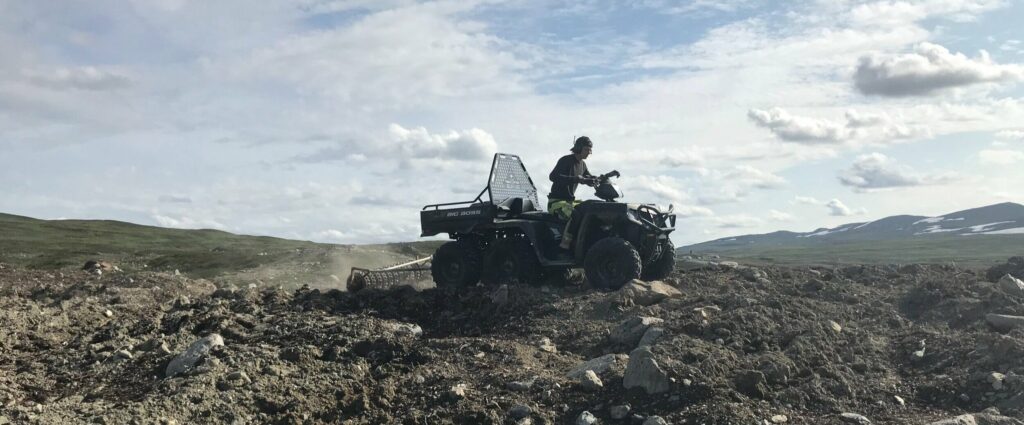
In 2020, Boliden and Ecogain have planned the remediation of a five-hectare area within the old mine site. Lessons learned from previous small-scale method trials were used to develop methods that work for large-scale rehabilitation in this type of environment.
Based on the previous pilot trials, it has been shown that the most successful method is to add some nutrient medium to the soil, to loosen the soil surface to create germination opportunities for seeds and to sow naturally occurring species.
In order to achieve this on a large scale, the aftercare was carried out as follows:
- Spreading of nutrients. The nutrient medium used consisted of sewage sludge mixed with wood chips. In order to get the right amount of nutrients, a standard agricultural fertilizer spreader was used, and a thin layer (about 2 cm) was spread over the area. The reason for mixing the sludge with wood chips was to get a more even supply of nutrients over several years, as too much nutrients can cause great growth in the first years and then almost no growth at all. The use of the sludge mixture is approved by the County Administrative Board of Västerbotten and sampling has been done on the sludge used.
- Loosening of the soil surface with an excavator. Loosening the soil surface has several advantages, firstly it was then possible to mix the applied nutrients with tillage from the site, which further dilutes the nutrients. In addition, it created suitable places for seeds to germinate, with a more favorable microclimate. Stekenjokk is a very windy area and it is generally difficult for seeds to germinate.
- Manual seed sowing of knotweed seed. The Sámi community emphasized the importance of goosefoot for reindeer grazing. Seeding was done manually, which was very time consuming. There was also an idea to collect seeds from plants on the site, which unfortunately failed as the seeds matured very late due to a cold summer.
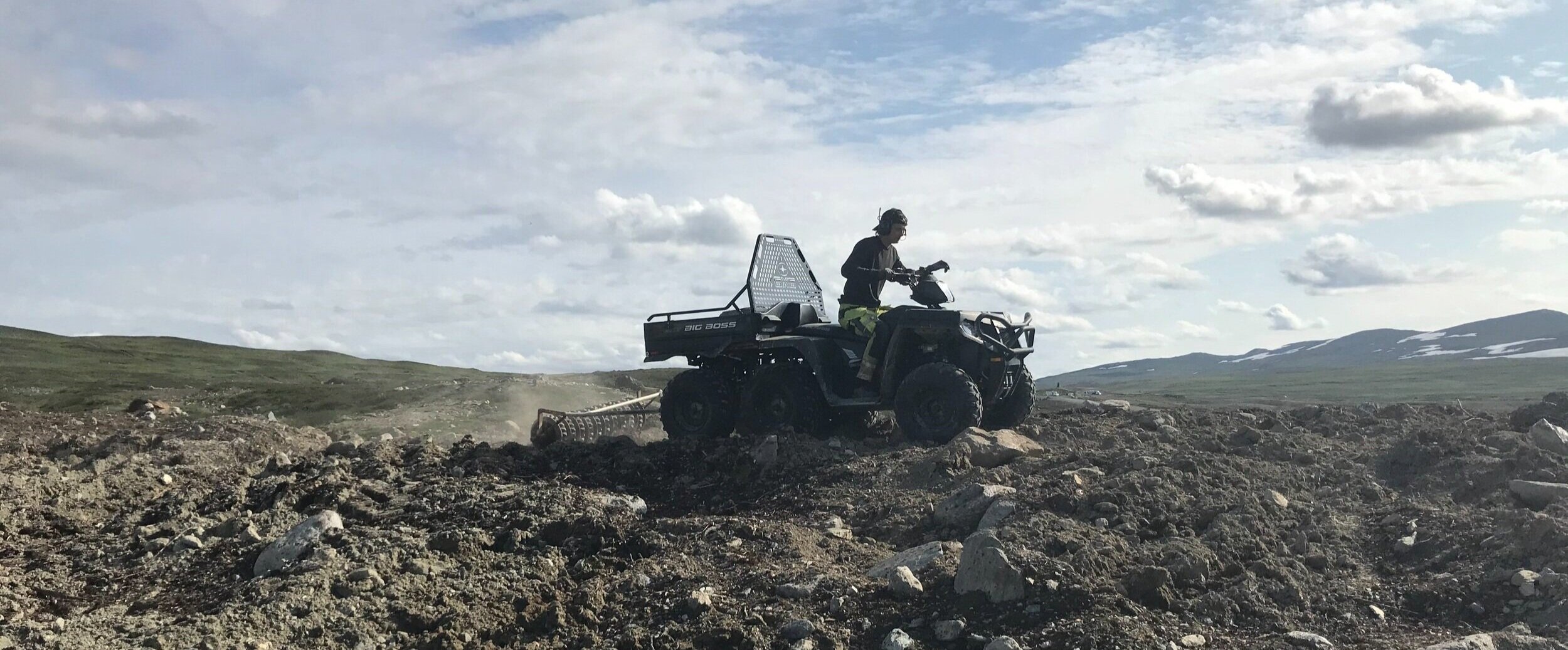
- Rolling was then done to improve the contact of the sown seeds with the soil material. This also partly secured the seeds from blowing away.
- Dwarf birch seedlings from locally collected seed have been raised at Skogforsk, these were finally planted.
On the whole, the methods worked well and the machines used were appropriate, even though they are not normally used on cold mountains. On the other hand, there is still potential for development of both the collection of wild seeds, both in terms of timing and method. But also the manual sowing of seeds needs to be developed as it was very time consuming.