For the third consecutive year, Ecogain's Biodiversity Index, an evaluation of the sustainability reports of the largest Swedish, Nordic and Baltic companies based on how they identify, set targets, implement actions and monitor biodiversity, has been released. A total of 240 companies in eight countries have been reviewed, and this year it is the Swedish Vattenfall that performs best in both the Swedish and international rankings.
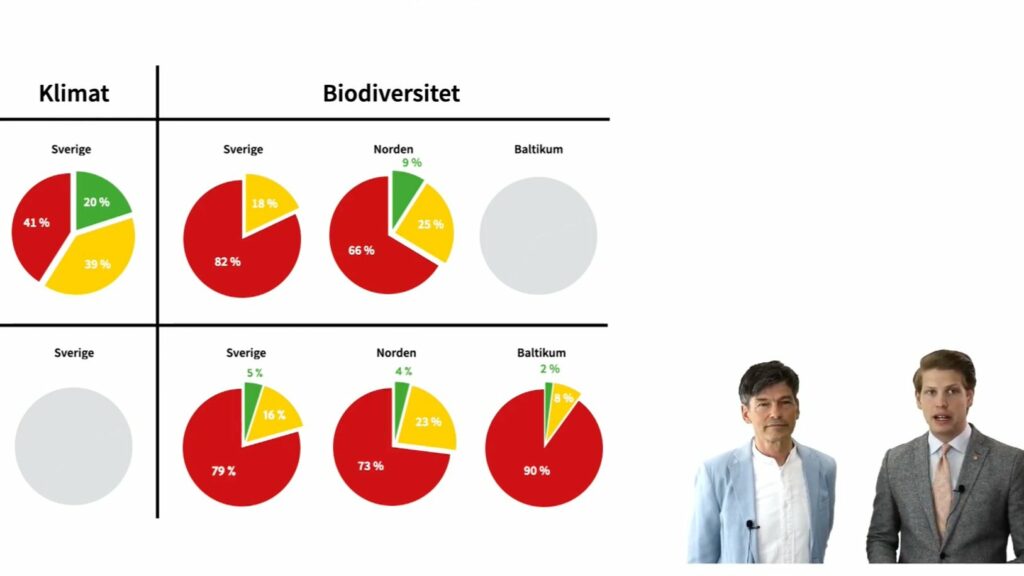
Last year's report clearly showed the gap between climate and biodiversity in the sustainability work of large companies - in 2020, not a single company surveyed in Sweden had set science-based biodiversity targets. Although the upward trend in actual targets and actions is slow, there is a significant difference in one aspect: for the first time, more than half of the largest Swedish companies mention biodiversity in their sustainability reports.
- 52% (2020: 43%) (2019: 42%) of the largest Swedish companies mention biodiversity in their sustainability reporting.
- 21% (2020: 18%) (2019: 14%) have set some kind of biodiversity policy or target.
- 9% have a measurable, time-bound and relevant biodiversity target for the company.
- 5% have a biodiversity target in line with science
Although the trend remains in the right direction, reporting by large companies shows that biodiversity is not being managed in line with the long-term business risk it represents.
- Fredrik Höök, CEO Ecogain.
This fall, the United Nations will adopt new global biodiversity targets, a '1.5-degree target for nature', which are expected to have a major impact on business. At the same time, the Science Based Targets Network (SBTN) is developing methods and guidelines for companies that want to set biodiversity targets in line with science. Ecogain has adapted this year's Biodiversity Index to align with the SBTN's preliminary framework.
Ecogain's Biodiversity Index evaluates companies based on 23 control questions. Companies are categorized according to the three colors of the traffic light depending on whether the company has a time-bound biodiversity target that is in line with science or not.
- The green light is given to companies with a time-bound target of NoNetLoss (NNL) or Biodiversity Net Gain (BNG) by 2030.
- Yellow light is given to companies with some form of biodiversity target or policy.
- A red light is given to companies without a biodiversity target or policy.
In this year's Biodiversity Index, four Swedish companies have been given the green light for their work, a boost from last year, when no company met the criteria. Vattenfall, Boliden, H&M and SCA have outlined time-bound targets for No Net Loss (NNL) or Biodiversity Net Gain (BNG) by 2030 in their latest sustainability reports. Vattenfall, which was ranked 10th among Swedish companies last year, now performs best both on the Swedish list and among all 240 Nordic and Baltic companies reviewed. Vattenfall is followed on the Swedish list by SCA and Boliden.
In its latest sustainability reporting, Vattenfall shows that it is aiming for a net positive impact on biodiversity by 2030. The company also shows that it is integrating biodiversity assessments into its business processes, which is reflected in our analysis.
- Anders Enetjärn, founder of Ecogain and initiator of the Biodiversity Index.
Ecogain's Biodiversity Index has grown from just Sweden to eight countries in three years, and there is a clear plan to continue scaling up. New for this year is that part of the analysis has been carried out with the help of AI, in collaboration with Knowit. With the Biodiversity Index 2021, Ecogain is also starting a collaboration with Nasdaq in the role of "Official Biodiversity Data Provider" based on the company data that Ecogain now collects and analyzes.
The Biodiversity Index aims to help businesses understand how biodiversity is relevant to them, so that they can integrate it as an integral part of their strategic sustainability and business. We are a long way from a truly sustainable business world, but we are seeing increased interest and engagement. The fact that major global financial players such as Nasdaq are now putting the spotlight on biodiversity is a clear signal to the business community of the need to raise the issue to a higher level in every company.
- Fredrik Höök, CEO Ecogain.
In a country-by-country comparison of the 20 highest ranked companies in each country, Finland is in first place, followed by Norway, Sweden and Denmark. Iceland is in last place, after the Baltic countries.