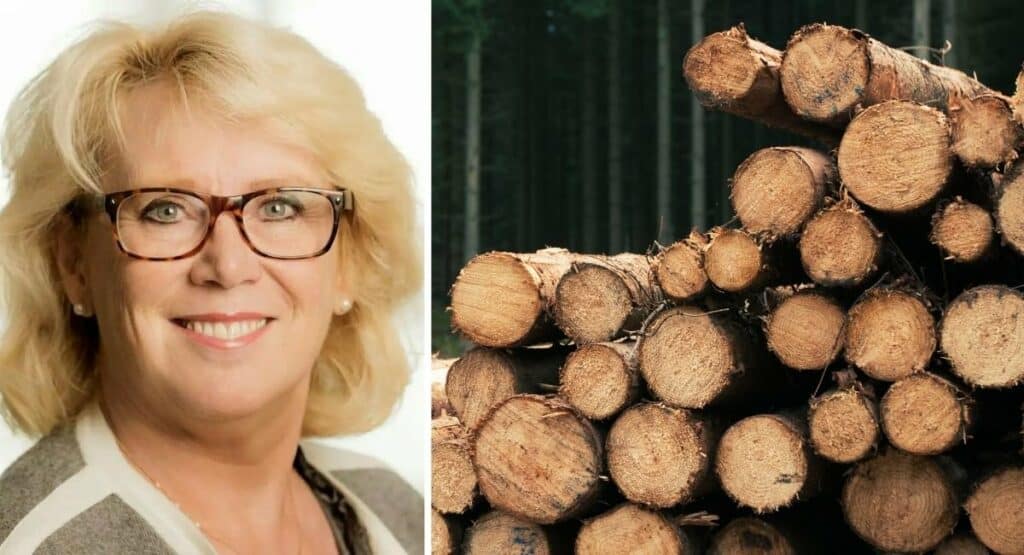
- We are wasting an incredible amount of resources and need to start thinking in a completely different way," says Lena Ek, the government's special investigator for the biotechnology inquiry.
In her final report, which was submitted to Minister for Rural Affairs Peter Kullgren on Friday, she emphasizes how crucial efficient resource management is for a stronger and more sustainable Swedish bioeconomy.
On Friday, Lena Ek handed over her final report on the investigation into a strong and sustainable bioeconomy in Sweden to Minister for Rural Affairs Peter Kullgren.
- The main conclusion is that we need to become much more efficient in the way we manage our valuable natural resources, for example using residual streams and surplus materials, as well as increasing cooperation, synergies and technological development," said Lena Ek.
Calls for resource efficiency and responsibility
The bioeconomy is based entirely on Swedish raw materials from soil, forest and water, and developing the bioeconomy can bring multiple and obvious benefits - the report mentions security, competitiveness and livelihoods, among others. But what are the risks to nature and our ecosystem services?
The report contains 17 proposals for action, including increased domestic production of renewable fuels, a national action plan to increase wood use, and investments in interdisciplinary research and innovation. However, no specific targets or directives for biodiversity protection are included.
Misconception that the bioeconomy requires more logging
However, Lena Ek says that with a new and more responsible approach to our bio-commodities, biodiversity will still be protected.
- "There is a big misconception that a stronger bioeconomy must mean more logging. I think it's more about being more responsible with the raw material we already have," she says.
The report also points to the importance of ensuring sustainable and responsible forestry. The environmental certification programs that exist are already quite tough, says Lena Ek, but more need to be environmentally certified for sustainable forestry.
Lena Ek will present her conclusions and recommendations in Parliament on Tuesday, December 5.