Environmental Consultant – Experts in Biodiversity and Sustainable Environmental Decision-Making
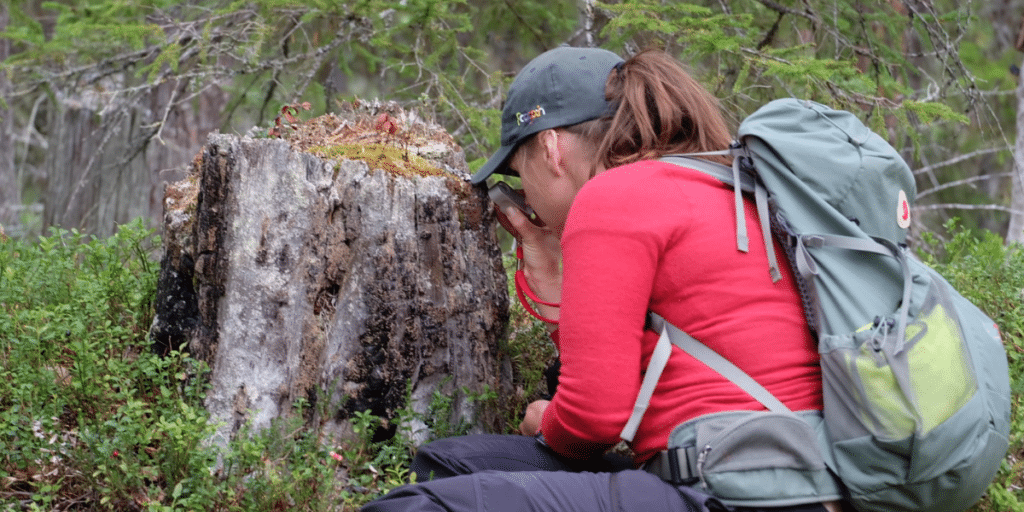
An environmental consultant helps companies, government agencies, and project owners understand, manage, and reduce their impact on the natural environment—while making decisions that are sound from a legal, financial, and ecological standpoint. Ecogain is a specialized environmental consulting firm focused on biodiversity, environmental impact assessments (EIA), natural value inventories, and environmental law. We operate throughout Sweden and have offices in Stockholm, Gothenburg, Malmö, Umeå, Östersund, Åre, and Kristianstad.
On this page
• What is an environmental consultant?
• What does an environmental consultant do?
• When should you hire an environmental consultant?
• How to Choose the Right Environmental Consultant
• Ecogain's environmental consulting services
• Industries we serve
• Our Work Process
• Why choose Ecogain as your environmental consultant?
• Frequently Asked Questions
What is an environmental consultant?
Anenvironmental consultantis an expert who provides advice and practical support on issues related to the environment, nature, and sustainability. The profession ranges from field investigations and permitting processes under the Environmental Code to strategic consulting at the management and board levels. This breadth means that environmental consultants come from diverse backgrounds—biologists, ecologists, civil engineers, lawyers, and social scientists—and that their assignments can range from a single species inventory to a corporate group’s entire environmental and biodiversity program.
The industry is fragmented. It ranges from one-person firms with specialized expertise to global consulting giants with thousands of employees.
Ecogain employs civil engineers, biologists, ecologists, lawyers, and social scientists. Together, we cover the entire process, from field surveys and data collection to strategic consulting at the management and board levels. This allows us to guide a project from the initial site assessment all the way through to operation, decommissioning, and mitigation measures.
What does an environmental consultant do?
The job responsibilities of an environmental consultant vary greatly depending on their area of specialization. Some focus on fieldwork and species inventories, others on legal matters and permitting processes, and still others on strategy, climate calculations, and sustainability reporting. Many consultants switch between these roles within a single project. Here are the most common job responsibilities:
• Permit review under the Environmental Code –applications for projects such as wind power, mining, roads, railways, ports, and industry.
• Environmental Impact Statement (EIS) –an analysis and report on how a project affects the environment and human health.
• Natural Value Inventory (NVI) –mapping of natural values in accordance with Swedish standard SS 199000:2023.
• Species Protection Assessment –assessment of the impact on protected species in accordance with the Species Protection Ordinance.
• Environmental law and consulting –interpretation of the Environmental Code, EU law, and case law.
• Biodiversity strategies –from “no net loss” to “net positive impact,” based on the hierarchy of considerations and linked to the TNFD and SBTN.
• Climate analysis and Scope 1–3 –calculations in accordance with the GHG Protocol and CSRD/ESRS E1.
• Nature-based solutions and ecosystem services –mitigation measures, restoration, and blue-green infrastructure.
• Environmental action plans and monitoring programs –to ensure compliance during the construction and operation phases.
• Environmental coordination –ongoing support throughout the project’s lifecycle.
Since our inception, Ecogain has focused on biodiversity as a core competency. We are one of only three consulting firms worldwide to be part of the SBTN Corporate Engagement Program, and we were among the first in Sweden to integrate Science Based Targets for Nature into our client services. We are represented in several national and international expert networks within SBTN and TNFD (Task Force on Nature-related Financial Disclosures).
When should you hire an environmental consultant?
The most common reasons for hiring an environmental consultant are:
1. Permit requirement –the activity requires a permit under the Environmental Code (for example, Chapter 9 on environmentally hazardous activities, Chapter 11 on water-related activities, or Chapter 7, Section 28a on Natura 2000 permits) or other legislation.
2. Investment or development –you are planning to establish, expand, sell, or close down a business and need information on environmental risks, natural values, and regulatory compliance.
3. Sustainability reporting –The CSRD and ESRS impose legal reporting requirements on large companies (under the Omnibus I Directive, effective in 2026, this applies to companies with more than 1,000 employees and net revenue exceeding 450 million euros). Voluntary frameworks such as TNFD, SBTN, and the EU Taxonomy provide structure for work on biodiversity, climate, and nature dependencies.
4. Complaints, incidents, or regulatory inspections –a government agency or neighbor has pointed out deficiencies or raised questions, and you need an independent investigation.
5. Voluntary commitments –you want to go beyond legal requirements, such as net positive biodiversity, science-based targets, or biodiversity reporting.
How to Choose the Right Environmental Consultant
Environmental consultants can specialize in a variety of areas and possess diverse expertise. Here are some things to look for when comparing them:
• Specialization –does the consultant’s expertise match your needs? Biodiversity, climate, environmental law, and permitting are distinct areas of expertise, even though they overlap.
• Industry experience –has the consultant worked on projects in your sector, and can they provide examples of past projects?
• Interdisciplinary expertise –can the team switch between fieldwork, legal matters, and business strategy?
• Authority and independence –Is the consultant a recognized authority in the industry and independent of suppliers and contractors?
• Local presence –is the consultant based in the region where the project will be carried out? This saves time, money—and CO₂.
• Certifications and quality management –ISO 9001, ISO 14001, or equivalent standards demonstrate that procedures are documented.
Ecogain's Environmental Consulting Services
We offer a comprehensive range of services in the areas of the environment and biodiversity. Learn more about each service below.
Permits and Regulatory Processes
• Environmental Impact Statement (EIS)
• Permit review under the Environmental Code
• Environmental law and legal advice
Natural values and biodiversity
• Natural Value Inventory (NVI)
• Species Protection Study
• Action plans and ecosystem services
Strategy and Reporting
• Sustainability Report (CSRD/ESRS)
• Environmental Strategy and Current Status Analysis
→ View the full service catalog
Industries we serve
Ecogain’s environmental consultants have extensive experience in industries where environmental impact is critical to business success:
• Wind power, hydropower, and renewable energy
• Mining and minerals industry
• Aggregate and quarrying industry
• Infrastructure (roads, railways, ports)
• Forestry, agriculture, and aquaculture
• Manufacturing and process industries
• Real Estate, Urban Planning, and Local Governments
• Finance, insurance, and investors
Why choose Ecogain as your environmental consultant?
• Specializing in biodiversity –we were among the first in Sweden to integrate biodiversity into business decisions.
• Interdisciplinary team –biologists, ecologists, civil engineers, lawyers, and social scientists all under one roof.
• Scientific basis –we keep abreast of the latest research and contribute to innovation and development ourselves, participate in expert networks, and run the Business and Biodiversity Sweden business network.
• ISO 9001-certified quality management system –documented procedures that ensure predictable delivery.
• CLIMB –a biodiversity tool that enables the calculation and monitoring of the impact on biodiversity resulting from changes in land use. The tool has been validated against BREEAM and is used in projects within the energy, mining, and civil engineering sectors.
• Business & Biodiversity Sweden –Since 2016, Ecogain has been running this business network, which brings together Swedish companies and organizations working toward nature-positive business development, and serves as a natural meeting place for the business community, government agencies, and the research sector.
• A local presence throughout Sweden –seven offices and projects from Skåne to Norrbotten.
• Extensive experience and a strong reputation—with numerous high-profile case studies and clients in the energy, infrastructure, mining, civil engineering, and finance sectors.
Frequently Asked Questions
How long does the permitting process under the Environmental Code take?
The time required varies significantly depending on the type of project, its location, and whether the decision is appealed. Statistics from the Swedish Wind Energy Association for onshore wind power from 2014 to 2023 show that the process typically takes more than 24 months, and can take up to approximately 83 months if the case is appealed to the Land and Environment Court of Appeal. The EU Renewable Energy Directive (2018/2001) sets a target of 24 months for renewable electricity production. Smaller, uncontested cases can be resolved in 12–24 months, while mining, hydropower, and major infrastructure projects regularly take 7–10 years or more. What actually shortens lead times is properly defining the scope of the consultation early on and entering the review process with complete documentation—above all, an NVI in accordance with SS 199000:2023, a site selection study that truly compares alternatives, and a species protection study that follows current best practices.
Do all projects require an environmental impact statement?
No. An environmental impact statement (EIS) as part of a specific environmental assessment is required only if the activity is likely to have a significant environmental impact (Chapter 6, Section 20 of the Environmental Code). Section 6 of the Environmental Assessment Ordinance (2017:966) lists the activities for which a significant environmental impact is always presumed—for example, large wind farms, quarries exceeding certain thresholds, highways, and certain industrial facilities. For these, the process proceeds directly to a specific environmental assessment. For other activities requiring a permit, a preliminary consultation is conducted, after which the county administrative board decides whether a specific environmental assessment should be carried out (Chapter 6, Sections 23–26 of the Environmental Code). Activities posing a lower environmental risk (C-activities) usually only require a notification under Chapter 9 of the Environmental Code and the Environmental Assessment Ordinance (2013:251).
What is the difference between a specific environmental assessment and a strategic environmental assessment?
The difference lies in what is assessed. A specific environmental assessment is conducted for a specific activity or measure that is subject to a permit or admissibility review under Chapters 9, 11, or 17 of the Environmental Code and that is likely to have a significant environmental impact—the result is an EIA that is submitted with the permit application. A strategic environmental assessment is conducted instead for plans and programs (master and detailed plans under the Planning and Building Act, regional plans, marine spatial plans, waste management plans) that are likely to have a significant environmental impact, and results in an EIA for the plan. These concepts were introduced when Chapter 6 of the Environmental Code was completely rewritten through Government Bill 2016/17:200Environmental Assessments, which took effect on January 1, 2018—at the same time that the Environmental Assessment Ordinance (2017:966) came into force. In everyday language, “EIA” is used for both—in legal correspondence, the distinction is important.
What will happen to species protection in 2026?
Three separate changes will take effect in 2026—not a comprehensive revision of the Species Protection Ordinance. On May 1, 2026, SFS 2026:230 entered into force, amending Section 4 of the Species Protection Ordinance regarding birds following a correction in the Swedish language version of the Birds Directive (proposal in the final report SOU 2025:93). On July 1, 2026, a review of the national protection provisions (Sections 6, 8, and 9) is proposed to enter into force pursuant to memorandum KN2025/01529, with the aim of making protection more differentiated and adapted to the actual conservation needs of each species. The Government and the Federation of Swedish Farmers (LRF) have communicated September 1, 2026, as the target date for a new right to compensation under Chapter 31 of the Environmental Code when species protection hinders ongoing land use (Govt. Bill 2025/26:230, submitted to the Riksdag on April 1, 2026)—however, the bill text formally states “the date determined by the Government.” The concepts of continuous ecological functionality (KEF) and the conditions for exemptions under Section 14 of the Species Protection Ordinance are not directly affected by these changes—in this regard, the practice of the Court of Justice of the European Union (joined cases C-473/19 and C-474/19,Skydda skogen), the judgments of the Land and Environment Court of Appeal, and the guidance from the Swedish Environmental Protection Agency. The industry trend is nevertheless clear: species protection assessments need to be conducted early and with better supporting data.
What is the hierarchy of considerations, and how is it applied in practice?
The hierarchy of consideration—often referred to in Swedish as the damage mitigation hierarchy or the National Board of Housing, Building and Planning’s compensation ladder—is the principle that environmental impacts should be addressed in four steps: avoid, minimize, restore/remedy, and compensate. It is reflected in Chapter 2 of the Environmental Code (the rules on knowledge, precaution, and siting) and is legally supported by Chapter 16, Section 9 of the Environmental Code (conditions regarding compensation), Chapter 7, Section 29 (mandatory compensation for encroachment on Natura 2000 sites), and the Swedish Environmental Protection Agency’s Handbook 2016:1 on ecological compensation. In practice, it is better to relocate a development away from a sensitive area than to compensate for the loss afterward. Compensation is always a last resort and must not be used to enable a project that would otherwise not have been permitted. The same logic underlies “no net loss” and “net positive impact”—goals reflected in ESRS E4 and in the Kunming-Montreal Framework. Ecogain is one of the leading players in ecological compensation in the Nordic region and operates the CLIMB tool in collaboration with Boliden, LKAB, Cementa, SCA, Skellefteå Kraft, Specialfastigheter, Svenska Kraftnät, Vattenfall, Skanska, and Talga—a standardized method for quantifying and balancing biodiversity impacts across the entire hierarchy.
How do CSRD, TNFD, and SBTN differ?
The three sets of regulations complement one another but have different statuses and purposes. The CSRD (Directive 2022/2464) is EU legislation and has been implemented into Swedish law through amendments to the Annual Accounts Acts effective July 1, 2024. Under the Omnibus I package, formally adopted by the European Council on February 24, 2026, only companies that meet both the ≥1,000 employees and ≥€450 million in net revenue (cumulative) thresholds are now covered. The Stop-the-Clock Directive (EU) 2025/794 has been implemented into Swedish law via Government Bill 2025/26:21, effective December 31, 2025—phases 2 and 3 have been postponed by two years. Biodiversity is addressed in ESRS E4Biodiversity and ecosystemsand need only be reported if the topic is deemed material in the dual materiality analysis. TNFD is a voluntary global reporting framework built around the LEAP method (Locate, Evaluate, Assess, Prepare) – ESRS E4 explicitly refers to LEAP in its application guidance. SBTN provides a methodology for setting science-based targets for nature through a five-step process (Assess, Interpret & Prioritize, Measure/Set/Disclose, Act, Track) and using the AR3T action framework (Avoid, Reduce, Restore, Regenerate, Transform). In simple terms: CSRD sets reporting requirements, TNFD structures the analysis, and SBTN defines the target level.
At what time of year can a natural resource inventory be conducted?
Field surveys conducted in accordance with Swedish Standard SS 199000:2023 (which replaced the 2014 edition in May 2023 and will be made available free of charge by the Swedish Environmental Protection Agency starting in February 2025) are primarily carried out during the growing season. The general NVI season runs from snowmelt to late fall—in practice, roughly April–October in most of the country, with a focus on May–August. Surveys of birds, bats, or amphibians require specific periods dictated by the species’ biology: breeding bird surveys typically April–June, owls and eagles in early spring, bats using ultrasonic detectors June–August and wintering sites in February, and amphibians during the breeding season in spring and early summer. Winter surveys are conducted to track mammals on snow cover. Since the seasons are short and certain research questions require repeated visits, fieldwork should be planned at least six months in advance—for larger projects, often spanning two seasons to accommodate both breeding bird, bat, and amphibian surveys. Ecogain conducts NVI surveys and in-depth species inventories throughout Sweden and has established procedures for seasonal and resource planning in consultation with permitting authorities.